
The Cutting Hedge
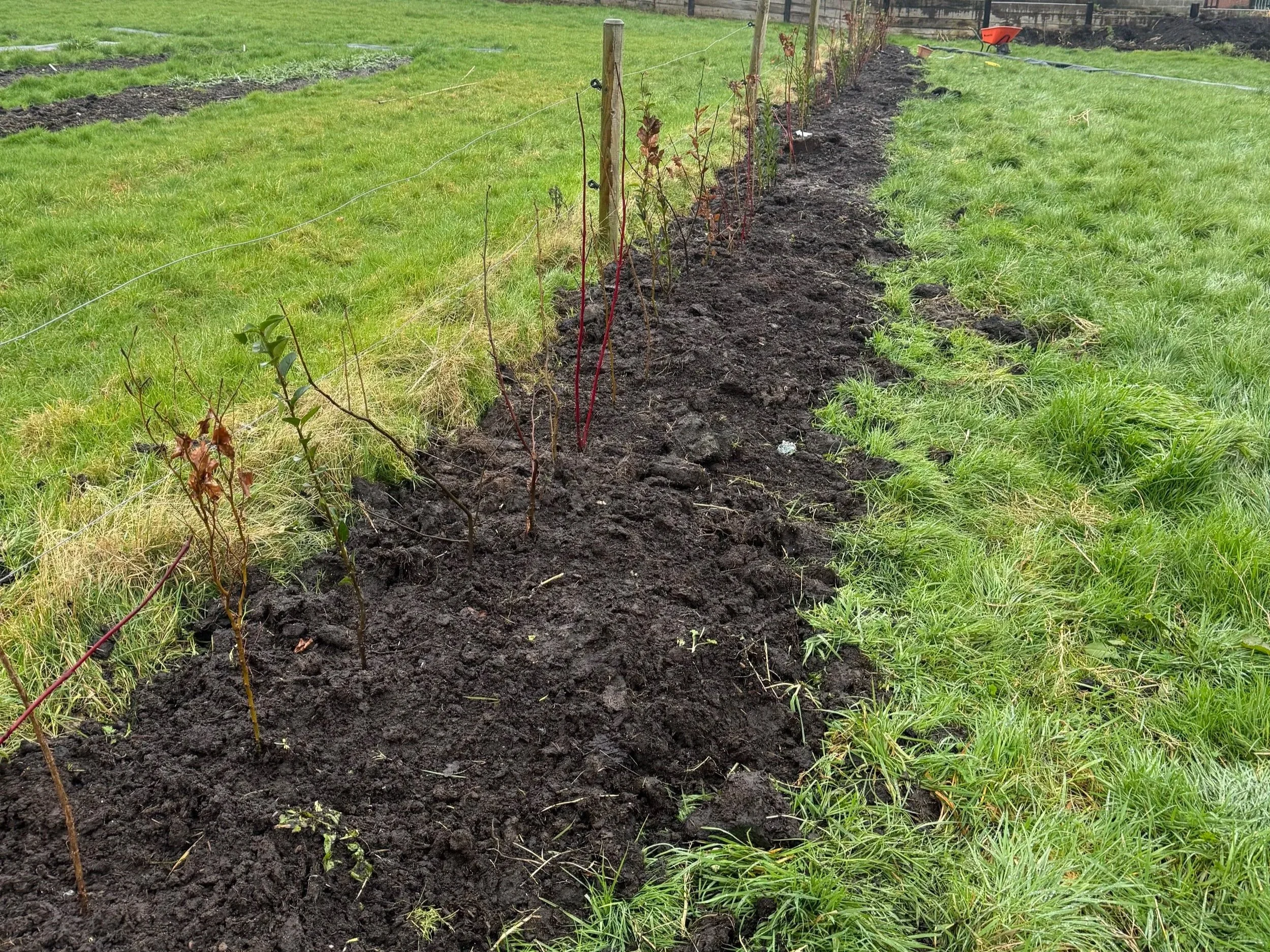
Last weekend, I finally got round to doing something I’ve been planning since the summer. I planted my cutting hedge!
I’ve planted 50-metres of cutting hedge with eight different varieties of shrub/tree: Privet, Beech, Alder, Viburnum, Cornus, Hazel, Hornbeam, and Amelanchier. The result will be more than just a boundary line, it’s a system designed for both productivity and sustainability.
Why a Mixed Cutting Hedge?
Traditional single-species hedges are neat and uniform, but a mixed hedge offers far greater climate resilience and ecological value. By combining species, I’ve created a hedge that should:
Provide foliage from early spring to late autumn
Flower and fruit at different times
Support a wide range of insects and birds
Respond differently to weather extremes
Allow rotational cutting for ongoing harvest
Diversity builds strength. If one species struggles in a given year, others will thrive.
Environmental Benefits
A mixed hedge like this is a biodiversity powerhouse.
1. Wildlife Habitat
Flowering species such as Amelanchier and Viburnum provide nectar for pollinators in spring. Hazel offers early pollen for bees. Cornus and Viburnum produce berries for birds in autumn and winter. Dense Hornbeam and Privet structure gives nesting sites and protection.
2. Carbon Capture & Soil Health
All hedges sequester carbon, but species like Alder add an extra benefit — many Alders fix nitrogen in the soil through symbiosis with bacteria, naturally improving fertility for neighbouring plants.
Leaf litter builds soil organic matter, encouraging fungi, worms, and microorganisms.
3. Biodiversity Resilience
Monocultures are vulnerable to pests and disease. A diverse hedge dramatically reduces the risk of total failure. It also prevents rapid spread of species-specific pathogens.
Productivity: A Working Hedge
Foliage for Cutting
Privet and hornbeam provide excellent dense green material for arrangements.
Beech holds its copper leaves through winter when cut young.
Amelanchier foliage brings soft seasonal colour.
Coppice Material
Hazel can be coppiced for pea sticks, bean poles, weaving rods, or light stakes. Regular cutting promotes vigorous regrowth.
Flowers & Berries
Amelanchier blossoms are stunning in early spring.
Viburnum provides clusters for cutting.
Cornus berries add autumn colour (and bird food).
Pest Management & Natural Balance
A healthy hedge acts as a biological control corridor.
Flowering plants attract hoverflies, whose larvae eat aphids.
Birds sheltering in the hedge help control caterpillars, slugs and insects.
Shelter & Shade
A 50m hedge becomes a windbreak and sunshade surprisingly quickly.
Reduced wind speeds will protect the flower crops in the field. Shelter also increases pollinator activity.
In summer, the hedge will cast dappled shade, enough to moderate heat without creating a dead zone beneath.
The Long View
The cutting hedge is not an instant miracle worker and it’ll take a bit of patience to achieve everything I’ve written about above. However, having planted a similar mixed hedge in my garden two years ago, I know how quickly it can grow into a success.
Right now it looks like sticks in the ground.
By year three, it’ll become a wall of green.
By year five and beyond, it’ll be habitat, harvest, shelter, and beauty all in one.
Like a fine wine, it’ll just keep getting better with age.